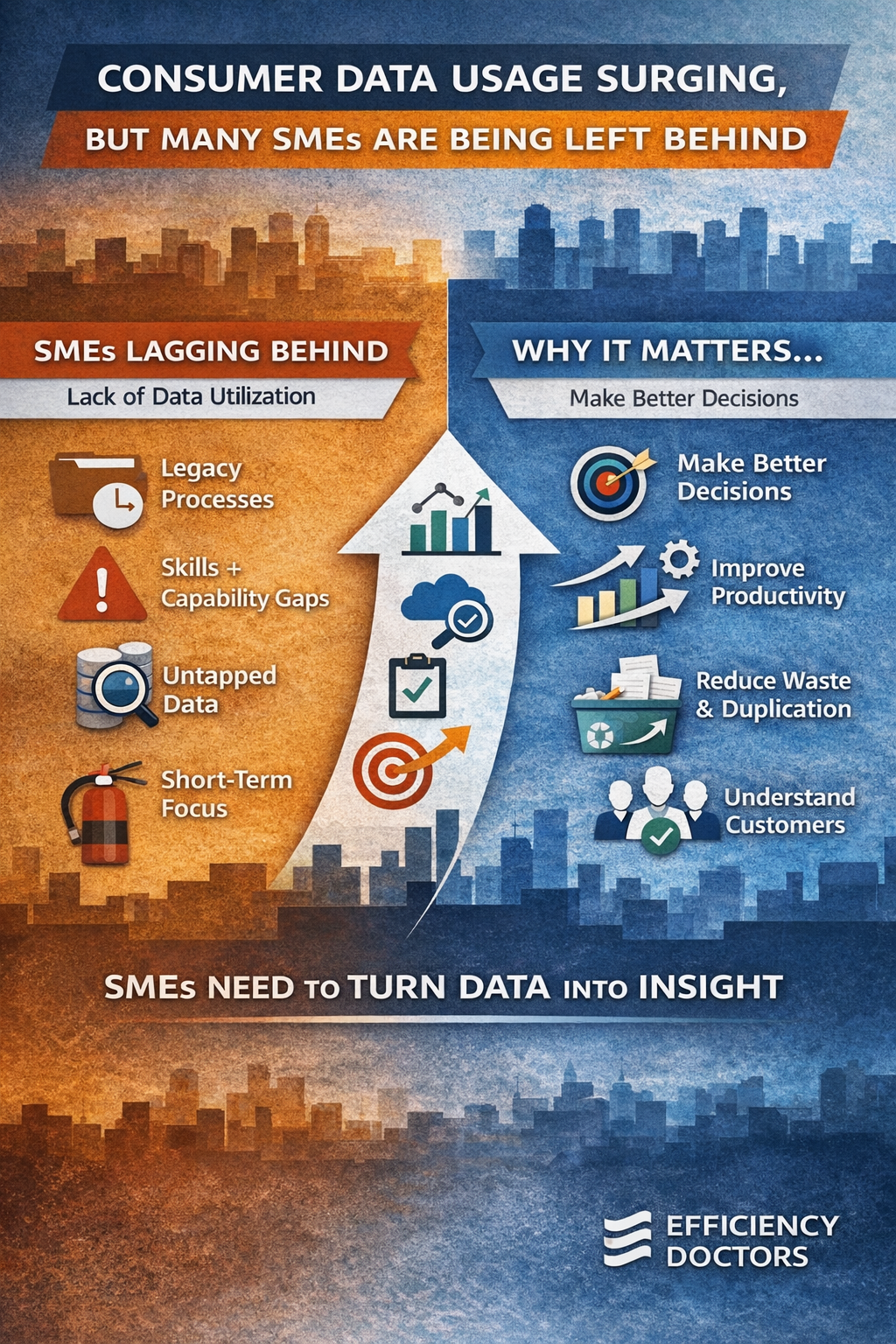
A recent article by Ciara O’Brien in The Irish Times highlighted a trend many of us in the operational improvement space have been watching closely: consumer data usage continues to surge, yet many SMEs are slow to adapt — both in capturing that data and using it strategically.
This gap is not just a tech problem. It’s a systemic efficiency issue.
Consumers Know What They Want
Customers today expect personalisation, speed, and digital convenience. Their phones, apps and online behaviours generate immense data — data that can reveal preferences, patterns and bottlenecks. Yet many businesses still treat data as an afterthought rather than a core organisational asset.
What This Means for Efficiency
At first glance, “data usage” might read like a technology headline. But from an efficiency perspective, the challenge goes much deeper:
- Decision-making remains intuition-driven rather than evidence-based
- Strategic planning is done with outdated or incomplete information
- Operational blind spots slow response times and increase waste
- Customer experience improvements lag behind competitors
In short, organisations that fail to harness their own data are working harder, not smarter.
Why Are SMEs Slow to Adapt?
Many of the obstacles reported — and experienced — are familiar:
1. Legacy processes
Paper-based or manual systems persist far longer than they should.
2. Limited digital skills
Leadership and teams need both capability and confidence with data tools.
3. Short-term focus
Day-to-day firefighting crowds out time for data strategy and insights.
4. Misaligned incentives
Organisations still reward activity, not outcomes or learning.
These are not unique to SMEs — they’re patterns we see across many organisations struggling to modernise.
Data Is an Efficiency Multiplier
When used well, data doesn’t just inform — it transforms:
- Predictive insights reduce rework and avoid waste
- Real-time visibility speeds decision-making
- Customer feedback loops surface priorities faster
- Performance tracking aligns teams toward shared goals
Investing in data is not a cost — it’s a capacity accelerator.
Five Practical Steps to Become Data-Driven
1. Define clear questions first
Start with what you need to know, not what tools you can buy.
2. Standardise data collection
Digital forms, unified platforms, consistent fields — these lay the foundation.
3. Create simple dashboards
Actionable views beat complex reports every time.
4. Build small wins
Pilot a dashboard for one process, one service, one team.
5. Train people, don’t just install tools
Tools help — but skills and culture drive adoption.
The Efficiency Imperative
The Irish Times article signals a broader trend: data is reshaping what customers expect — and what organisations must deliver. Those that adapt stand to improve not just performance, but resilience, agility and innovation.
Efficiency is not about doing more with less.
It’s about doing right with what you already have — and that starts with information you’re sitting on already.
At EfficiencyDoctors.ie, we help organisations bridge that gap — turning data potential into practice, and complexity into clarity.


 Efficiency Doctors
Leave a comment